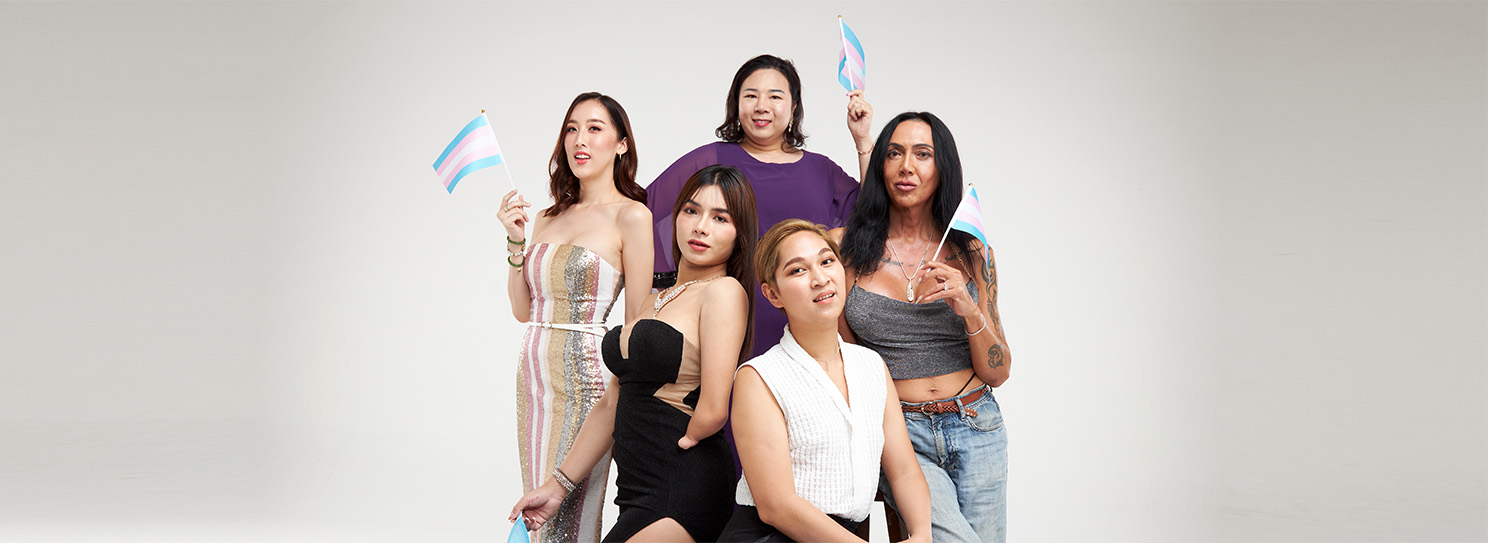

The Concept, Obstacles, and Future of Creating a Truly Equal Society
Have you ever wondered… dressing according to your gender identity could get you rejected for a job? Or loving someone could get you disqualified from the law? These are the realities that many LGBTQ+ people face every day, no matter how much the world has changed.
In the past few years, Thai society has seen significant legal and attitudinal changes regarding the rights of LGBTQ+ people. The passage of the Marriage Equality Act, which was approved in the House of Representatives, is one of the important milestones that reflects the increasing interest in the concept of gender equality.
However, while many people celebrate this progress, a more complex question arises: “Is this enough?” Legal changes are an important start, but at the societal level, are unfair attitudes and structures still deeply ingrained?
We still see news about discrimination against transgender people in the workplace, denial of the right to health services, or even recurring questions about the “appropriateness” of LGBTQ+ people to play an important role in society.
These issues indicate that equality is still a matter that needs to be discussed, and it is not just about LGBTQ+ people, but about everyone. And when we talk about “equality,” what exactly are we talking about?
• It’s just a legal right. Or is it truly an opportunity that everyone gets?
• Does equality mean giving the same things to everyone, or does it mean adjusting conditions so that everyone has fair access to opportunities?
• Why is society still afraid of changes that lead to equality?

To find these answers, we spoke with Asst. Prof. Dr. Ronaphum Samakkhi-karom, a lecturer at the Faculty of Public Health, Thammasat University, and President of the Thai Transgender Alliance (ThaiTGA) Foundation.
Working in academia and social movements, Ronaphum is one of the key figures in driving gender equality issues in Thailand. We would like to invite him to talk about what still needs to be fixed, obstacles that still need to be overcome, and the path we need to take in the future.
The definition of “equality”: The understanding that society still confuses
While the word “equality” has become a topic of increasing discussion at the policy and social level, if asked whether the general public really understands it, the answer may not be clear. Many times, “equality” is misunderstood as giving everyone the same thing regardless of different conditions, such as giving equal rights or resources under the law, but it is realized that in real life, each person starts from a different point.
“Equality is not giving everyone the same thing, but giving everyone an equal opportunity,” explains Ronaphum. “If everyone has different living expenses, giving everyone the same thing is not equal. It just seems equal, but it is not really fair.”
Imagine a running race. If we put all the runners at the same starting point, without considering whether some have expensive running shoes, some don’t, or some have heavy loads on their backs, it may seem “equal” because everyone starts at the same time, but in reality, it is an unfair competition from the start.
“If we want everyone to have a real chance, we have to make sure that the person without shoes gets shoes before the race. Or if someone has their legs tied with chains, we have to help them untie them before they start running. Otherwise, we are only seeing the surface of equality, but not really achieving fairness.” This is where “equality” and “fairness” differ significantly.

How is “equality” different from “fairness”?
In some cases, giving everyone the same rights may not be fair. Professor Ronaphum explained that **“Equality” means giving everyone the same amount, while “Equity” means considering who should receive what so that they can have equal opportunities with others.
“Think of a situation in a hospital. If an elderly patient and a young child walk in at the same time, who should receive treatment first? If we use the principle of ‘equality’, we will let everyone wait in line in order. But if we use the principle of ‘fairness’, we will consider that those who are more seriously ill or vulnerable should receive care first.” Professor Ronaphum gave us a clearer example.
This principle can be applied in all dimensions of society, whether it is access to education, employment, or public services. The problem is that Thai society still clings to the idea that “giving everyone the same amount is enough,” without considering that some people need more to truly receive equal opportunities.
Understanding the difference between “equality” and “fairness” is the first step in creating a truly equal society, not just on paper, but in real life.
“Equality” should be something that everyone is aware of, not just LGBTQ+.
Although the issue of equality is often discussed in terms of LGBTQ+ rights, in reality, inequality is a problem that occurs in all groups of people, whether it is economic inequality, educational opportunities, or access to basic resources.
Professor Ronabhum said, “If we understand that equality is about giving opportunities rather than giving the same things, we will begin to see that everyone in society faces inequality in different ways.”
When we talk about creating an equal society, we do not mean giving special privileges to any group, but rather fixing the structures that prevent some groups from accessing opportunities. Therefore, equality is not just a matter of LGBTQ+, but of everyone.

Obstacles to Creating Equality in Thai Society
Although the concept of “equality” has been increasingly discussed, making it a reality remains a complex challenge. What are the barriers that prevent the creation of an equal society for all? The major obstacle that Professor Ronaphum points out is not just the law, but the “fear” that is deeply rooted in Thai society.
“The biggest problem in Thai society is ‘fear’. Thais are afraid of everything. They are afraid that equal marriage will lead to fewer children being born. They are afraid that if transgender people can change their titles, there will be problems in the bureaucracy. They are afraid that if the government supports hormones for transgender people, it will be a burden on the budget, even though there is scientific evidence to support these issues that they do not have such a bad impact.”
Fear is a silent obstacle that causes equality to be resisted, not for reasons supported by data, but by emotions and inherited prejudices.
Unsupported fears that are used as an excuse to oppose equality
Most fears about LGBTQ+ come from beliefs that are not supported by scientific evidence, such as:
• The belief that marriage equality will lead to a lower birth rate – when in many countries with marriage equality, the birth rate is not directly due to this factor, but rather to changes in economic structures, welfare, and people’s lifestyles.
• The belief that changing the title of a transgender person will cause confusion in the bureaucracy – when in many countries the title has been allowed to be changed without any disruptive impact on the system.
• The belief that supporting healthcare services for transgender people is a burden on the budget – when in reality, improving everyone’s mental and physical health care will help reduce the burden on public health in the long run.
“Thai people still believe that LGBTQ+ is not natural, even though we have clear evidence that sexual diversity exists in every culture and throughout history,” explained Asst. Prof. Ronaphum. Sexual diversity is not something new that has just occurred in the present era. It has existed in every society and culture. However, in some periods and areas, society may try to cover it up and deny its existence.
“Thai law is based on fear, more than justice.” In addition to the people’s fear, Asst. Prof. Ronaphum also pointed out that Thai laws are often built on fear rather than fairness. “Many Thai lawyers tend to ask, ‘What problems will happen if I give this right?’ instead of, ‘How will society be better if I give this right?’ This is the mindset that needs to change.”
Thailand has a history of using the law as a tool for control, rather than for promoting opportunities and rights for its citizens. Many laws related to LGBTQ+ are not designed to support or protect their rights, but are rather “precautionary” or created out of concerns that granting rights will have negative effects. This mindset means that any change is met with resistance, even though there is evidence from other countries that these changes do not cause the problems feared. Changing mindsets at the legal and policy levels must therefore go hand in hand with changing societal attitudes.
“Fear” can be solved with information and understanding.
Although fear is a major obstacle, it is not something that cannot be solved. Ajarn Ronabhum believes that providing correct information and giving people the opportunity to learn can help reduce fear and create understanding.
“Fear is not an unsolvable problem. If we provide correct information and facts, people will start to understand more and the fear will decrease on its own.”
For example, in the past, many people were afraid of having a woman as a leader of the country or that having an alternative gender in the workplace would be inappropriate. But as time passed and society became more open to new information, these attitudes began to change. Creating an equal society must start by opening up spaces for learning and encouraging people to dare to question old beliefs that may not have supporting evidence.
“Equality is possible if we do not let fear take over.” Ultimately, the real obstacle to equality in Thailand is not outdated laws or complex social structures, but “fear” that is made to seem like a reason to resist change. “If Thais can overcome their fear and open their minds to new ideas, we will see that a more equal society is possible.”
The Foundation’s role in driving equality
Creating equality in society does not come from legal changes alone. It requires the work of organizations that drive policies and create understanding in society. The ThaiTGA Foundation and the Center for Health Promotion for LGBTQ+ People play an important role in pushing for LGBTQ+ rights to not just be a specific issue, but a social agenda. One of the outstanding achievements is the push for the Marriage Equality Act, which Assoc. Prof. Ronaphum said, “Marriage Equality is not a matter of ‘granting special privileges’ to LGBTQ+ people, but rather, it is a ‘return of rights’ that should have been given to everyone from the beginning.”
However, the Marriage Equality Act is only the beginning. There are many other issues that need to be pushed, such as changing the title of transgender people and social welfare rights that cover the needs of LGBTQ+ people, which are all important steps to make equality a reality in everyday life. “We have already had Marriage Equality, but it is not enough. We have to move forward so that everyone in society has truly equal rights,” Assoc. Prof. Ronaphum said, emphasizing that change requires cooperation from all sectors, not just waiting for the law to change, but also changing society’s attitudes at the same time.
Social Attitudes and Future Changes
Although Thai society has become more open about sexual diversity, the more important question is, “Is it enough?” Assoc. Prof. Ronaphum gave his perspective that even though we see changes in the law and discourse in the media, in practice, LGBTQ+ people still face many obstacles in their daily lives.
“We can say that society is more open compared to ten years ago, but are LGBTQ+ people comfortable living their lives? The answer is no, not yet.” A simple example is in the workplace. Although many organizations have announced policies supporting sexual diversity, there are still complex forms of discrimination, such as questioning the capabilities of transgender people or providing limited job opportunities. “Many people say that they do not dislike LGBTQ+ people, but they do not want them to be their boss or representative of the organization. This reflects the idea of a ‘appropriate space’ for LGBTQ+ people, which is not true equality.”
So how can we change society’s attitudes? Asst. Prof. Ronaphum points out that “change must start with learning.” The general public must receive accurate information about LGBTQ+ people, not just from mainstream media, which sometimes presents stereotypes. “We must start by telling stories that reflect the humanity of LGBTQ+ people. It is not just about color, fun, or novelty, but also about rights, opportunities, and equal living conditions.”
How can the new generation be a part of creating an equal society? Asst. Prof. Ronaphum said that the most important thing is to question what was once considered “normal.”
“If you see something unfair, don’t ignore it. Don’t think that ‘it’s been like this for a long time.’ The new generation is more powerful than they think. And every change in history starts with people who dare to question it.”

Equality at the individual and daily level
For the general public who are not in the LGBTQ+ rights circle but want to support equality, Asst. Prof. Ronaphum emphasizes that “support does not always have to be a political movement or a rally. It can start from small things in everyday life.”
One of the most powerful ways is to share accurate information on social media. The professor explains that disseminating content that provides accurate knowledge about LGBTQ+ can help reduce deep-rooted biases and misunderstandings in society. “Many times, fake news and misinformation about LGBTQ+ are shared without people checking. This kind of misunderstanding accumulates and becomes bias that people unknowingly believe.”
Therefore, simply choosing to share content that supports equality instead of sharing rumors or jokes that devalue LGBTQ+ is an important part of making a contribution. In addition to providing accurate information, there are many other ways that the general public can help create a more equal society, such as:
• Support businesses that have policies that are open and provide fair opportunities for LGBTQ+ people.
• Create safe spaces in everyday life, such as not using words that degrade the dignity of diverse genders and not allowing discrimination to happen without anyone raising an objection.
• Question the systems that discriminate against LGBTQ+ people, such as laws, organizational policies, or educational curricula. That doesn't cover gender diversity
"Some people think that if we're not LGBTQ+, this doesn't concern us. But the truth is, an equal society benefits everyone because it means living without fear of being discriminated against just because we're different," Asst. Prof. Ronaphum emphasized that everyone can be a part of the change, and sometimes, seemingly small things like sharing correct information can be an important first step in moving society in a better direction.
Equality isn't about one person, it's about all of us. "So, how do you want to be a part of this change?"
Throughout our conversation with Asst. Prof. Dr. Ronaphum Samakkhi-Kham, we saw a clear picture that creating an equal society for gender diversity isn't just about amending the law, but also about changing the entire system, mindset, and culture of society. "Equality" doesn't just mean giving equal legal rights, but about creating fair opportunities so that everyone can live with dignity, not be excluded by outdated social structures, and not have to fight for what they were born with.
The biggest obstacle to this is not just the outdated legal system or social structures that encourage discrimination, but the "fear" and "misunderstanding" that are still deeply rooted in Thai society. Many people still believe that giving LGBTQ+ rights is giving "privilege" to a certain group of people. In reality, it’s about restoring the rights they should have had in the first place. While we celebrate progress like the passage of marriage equality laws, we must remember that real change cannot happen if society is still plagued by bias that LGBTQ+ people should receive “some rights” but not “true equal rights.” But change is not just about activists or organizations. Everyone can be a part of it, even if it’s just sharing accurate information on social media, questioning injustice, or supporting safe spaces for all without discrimination.
Creating an equal society is not something that has not yet arrived.
It is something that we all must do today.
the SPACE believes that every voice and every small action
is meaningful. “Because in the end… an equal society is not just for LGBTQ+, but for all of us.”
CR.THESPACE
Sources and further reading
Primary and authoritative sources used for context and fact-checking.
- Frequently asked questions on sexual and gender diversity, health and human rights World Health Organization (WHO)
- The Thai Handbook of Transgender Healthcare Services IHRI & Center of Excellence in Transgender Health, Chulalongkorn University
- Standards of Care for the Health of Transgender and Gender Diverse People, Version 8 World Professional Association for Transgender Health (WPATH)
- Consolidated guidelines on HIV, viral hepatitis and STI for key populations (2022) World Health Organization (WHO)
- STI Treatment Guidelines: Transgender and Gender Diverse Persons U.S. Centers for Disease Control and Prevention (CDC)
- Legal Gender Recognition in Thailand: A Legal and Policy Review United Nations Development Programme (UNDP)
- The struggle of trans and gender-diverse persons United Nations Human Rights (OHCHR)