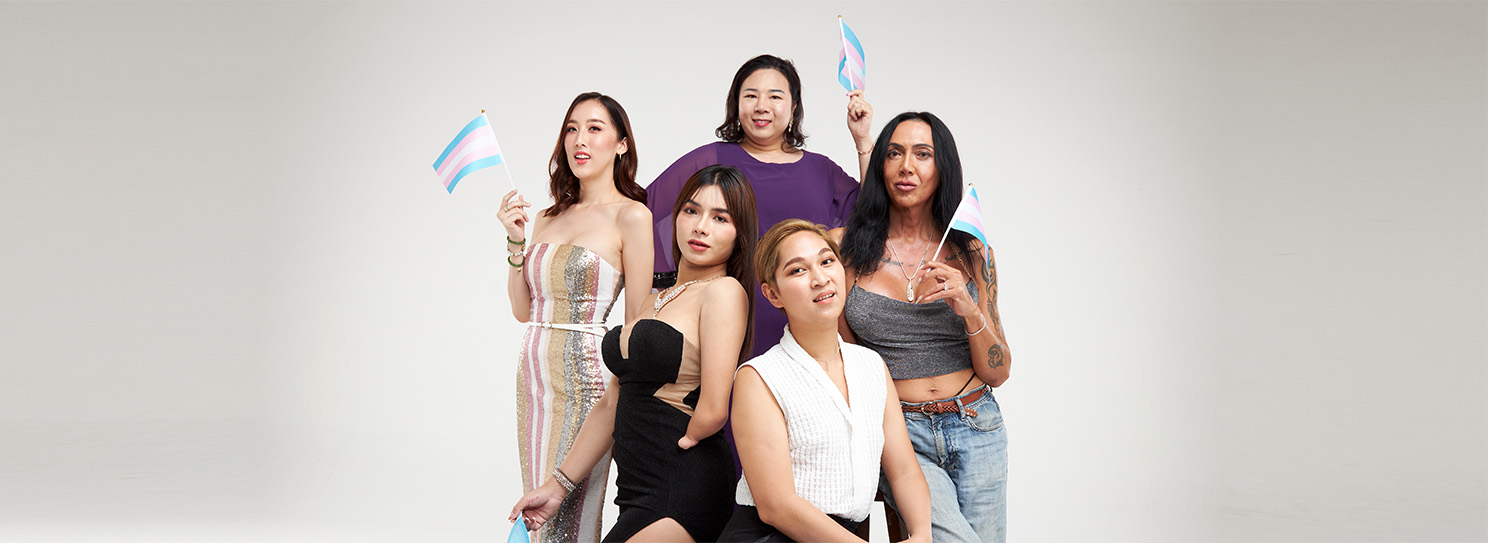

For many people, the word family represents comfort—a place to rest emotionally when the outside world feels overwhelming. But for many transgender women, home can be the place where they must be the most cautious—careful with their words, their appearance, and even their emotions.
Being a transgender woman in Thai society does not only challenge social norms in public spaces; it also challenges deeply rooted beliefs, expectations, and gender roles within families. Mental health for transgender women is therefore shaped not only by personal experiences, but profoundly by family dynamics that begin in childhood and continue into adulthood.
Mental Health Does Not Begin with Being Transgender—It Begins with How One Is Treated
One of the most persistent misunderstandings is the belief that transgender women experience mental health struggles because they are “confused” or “emotionally unstable.” In reality, both Thai and international research consistently shows that the greatest impact on transgender women’s mental health comes from rejection, control, and invalidation.
When families refuse to accept a child’s gender identity—whether through direct criticism or subtle pressure such as forbidding gender-affirming clothing, refusing to use chosen names, or expressing repeated disappointment—these actions gradually erode self-confidence. Over time, transgender women may internalize the belief that being themselves is a burden to their family.
Thai-Style Love: When Care Turns into Pressure Without Intention
Many Thai families do not reject transgender women out of hatred, but out of fear. Fear that their child will suffer, be judged by society, or face an uncertain future outside traditional expectations.
Statements such as:
- “We’re just worried about you.”
- “Life will be harder if you live this way.”
- “We’re afraid you won’t be accepted.”
While these words often come from love, when they are paired with non-acceptance, they can become emotional pressure. Transgender women may begin to feel that their happiness causes pain to their parents—creating deep guilt and inner conflict.
Non-Acceptance Within the Family: Long-Term Mental Health Consequences
Transgender women who grow up in unsupportive families face significantly higher risks of depression, anxiety, chronic stress, and emotional exhaustion. Many develop coping mechanisms based on concealment—living two lives: one to satisfy family expectations, and another to express their true selves.
Over time, this emotional split can lead to isolation, burnout, and persistent self-doubt. It can affect education, career growth, relationships, and the ability to make confident life decisions.
Family Acceptance: One of the Strongest Protective Factors for Mental Health
In contrast, family acceptance is one of the most powerful protective factors for transgender women’s mental well-being. Being listened to without judgment, supported even when understanding is incomplete, and loved without conditions can dramatically improve mental stability.
Transgender women who receive family support tend to have stronger self-esteem, greater emotional resilience, and more confidence in seeking both physical and mental health care. Knowing that there is a secure emotional foundation allows them to face societal challenges with greater strength.
The Family’s Role During Gender Transition: Standing Beside Without Rushing
The gender transition period—starting hormone therapy, experiencing physical changes, and living openly in one’s affirmed gender—is often the most emotionally vulnerable time in a transgender woman’s life.
Families do not need to fully understand medical details or social theory to provide meaningful support. What matters most is presence: staying close, listening without pressure, and allowing the transition to unfold at its own pace. Giving time, patience, and reassurance during this phase can make a profound difference.
Family Influence on Access to Mental Health Care

Family attitudes directly affect whether transgender women feel safe seeking mental health support. In families where therapy or psychiatric care is viewed as shameful, transgender women are more likely to suppress distress and avoid professional help.
In contrast, families that treat mental health care as a form of life care—not weakness—help open doors to early support and healing. This reduces the likelihood of long-term psychological harm.
The Changing Role of Thai Families in a Modern Society
In contemporary Thai society, the role of the family is gradually shifting—from controlling life paths to supporting growth with dignity. Families do not need to “understand everything” immediately, but they can begin by prioritizing their child’s well-being over social image.
Small actions—using chosen names, respecting pronouns, and avoiding repeated demands for justification—can have a powerful impact on mental health.
Family Acceptance Is the Foundation of Mental Health for Transgender Women
The role of family in the mental health of transgender women in modern Thai society is neither abstract nor distant. Families can either empower transgender women to feel valued and secure—or unintentionally become a source of emotional harm.
When families choose to listen rather than judge, stand beside rather than control, and love without conditions, mental health becomes more than survival. It becomes stability, dignity, and hope—within a society that is learning, step by step, to embrace diversity with compassion and understanding.
Sources and further reading
Primary and authoritative sources used for context and fact-checking.
- Frequently asked questions on sexual and gender diversity, health and human rights World Health Organization (WHO)
- The Thai Handbook of Transgender Healthcare Services IHRI & Center of Excellence in Transgender Health, Chulalongkorn University
- Standards of Care for the Health of Transgender and Gender Diverse People, Version 8 World Professional Association for Transgender Health (WPATH)
- Consolidated guidelines on HIV, viral hepatitis and STI for key populations (2022) World Health Organization (WHO)
- STI Treatment Guidelines: Transgender and Gender Diverse Persons U.S. Centers for Disease Control and Prevention (CDC)