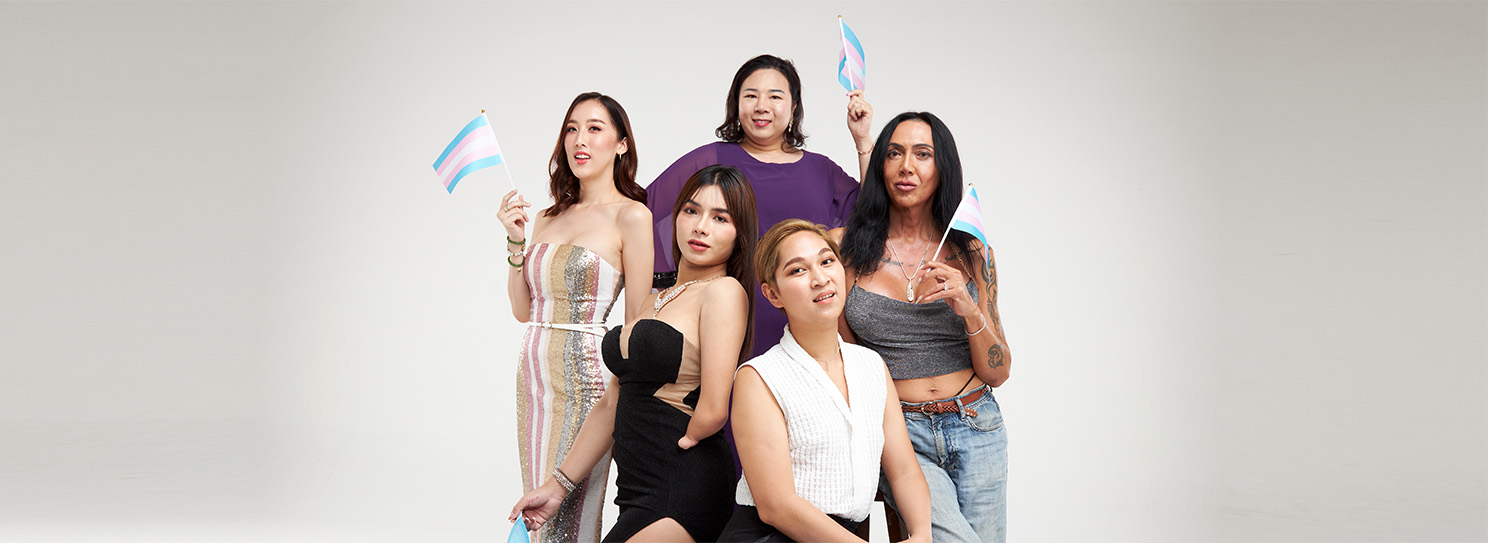

Hormones as a 'benefit' under the national health insurance system (gold card) or not seems to be a topic that the LGBTQ+ community, especially transgender individuals, is eagerly awaiting progress on.
Following a request from Prime Minister 'Serayut Thaweesin' and the Ministry of Finance, the National Health Security Office (NHSO) is now examining the feasibility of including hormones as a benefit. The NHSO promptly forwarded the matter to relevant institutions, including the Royal College, to develop guidelines for hormone use comprehensively. This includes examining the physical and financial impacts, as well as exploring the possibility of making hormones accessible to other population groups.
While clarity on this issue may take some time, it provides a ray of hope for the LGBTQ+ community, particularly transgender individuals, or those seeking gender transition from male to female and female to male. Such individuals heavily rely on hormone usage and anticipate improved access to 'essential' healthcare services with enhanced safety.
Currently, there are three main ways to 'take hormones.' Firstly, through ingestion, which includes contraceptives, hormones for gender transition, and medications for other conditions, incorporating hormone content. Secondly, through injection, where hormone fluids are obtainable in pharmacies or online stores, with administration often conducted by private clinics. Thirdly, through topical application, primarily on the underarm or the area beneath the kidneys, known for rapid absorption. Topical hormones are typically the most expensive.

However, it is crucial to note that among these methods, the quantity and type of hormones used can have varied effects on the body and mind. Moreover, within the LGBTQ+ community, there are individuals using hormones for unconventional gender transitions. Notably, among LGBTQ+ youth, some may misuse hormones, resulting in severe long-term consequences, such as 'blood clots.' Additionally, some might use hormones without proper knowledge, relying on peer recommendations, impacting their physical and mental well-being, and overall quality of life.
The experience of 'A' or Chat Chai Jai Boon, a 22-year-old transgender woman with long, flowing hair and a slender figure, confirms the aforementioned realities.
A began by sharing with "The Coverage" about her use of hormones. In her first year of university, her goal was to have female hormones in her body to enhance beauty, softness, and the feeling of being like a woman.
"I was determined that once I entered university, I would start taking hormones. Although I desired it during my last year of high school, I was afraid it would affect my emotions, thoughts, concentration during exams. Once I got into university, I started hormones immediately, but the results were not as expected," A said.
A's chosen method for hormone intake involves ingesting two pills of male hormones and two pills of female hormones daily. She follows this routine for a year, taking breaks of 2-3 months to allow her body to rest.
She explained the transformations she experienced afterward:
- In the first week, the desire for sexual activity diminished, and although her genitals remained normal, there was no inclination towards sexual relations or self-stimulation.
- In the subsequent weeks, the impact on emotions became more pronounced. A felt unable to manage her emotions, affecting decision-making in various aspects of daily life, such as studying and emotional stability.
- Weeks three and beyond continued to exhibit emotional fluctuations. The desire for sexual activity disappeared entirely.

"It's like the emotions are not stable. Anything we used to handle suddenly becomes unmanageable. It has an impact on emotions and mental well-being," A explained.
Furthermore, A expressed concerns about the short-term and long-term effects on her body. She pointed out the need for continuous intake over an extended period and the financial implications of daily expenses.
A decided to stop hormone intake due to the significant impact on her studies and felt it was not worth it during her adolescent years. She indicated a possibility of returning to hormone use in the future once she starts working.
A's direct experiences emphasize the importance of considering hormone use as a comprehensive benefit to ensure safety and appropriateness for one's body. Accurate knowledge of hormone usage is crucial to prevent long-term health issues, especially for those considering gender transition.
As per the experiences shared by friends, the majority of LGBTQ+ individuals or those interested in gender transition often share information on social media about various hormone influencers—some being popular, others not. They recommend specific brands, dosage combinations, and showcase apparent transformations. However, many of these hormones are intended for individuals with hormonal abnormalities, not necessarily for those seeking gender transition or birth control. A more transparent healthcare system would address this issue and provide clearer guidance on the correct use of hormones.
These perspectives align with those of Peeraphon (last name withheld), another individual who shared their journey with "The Coverage." Peeraphon expressed their desire to transition from male to female, starting the process of using birth control pills in the 10th grade. They received advice from older peers and friends to enhance their femininity.
Peeraphon hoped for specific physical changes, including breast development, clear skin, a petite figure, and reduced muscle mass. However, they acknowledged that if financial constraints arise, they might discontinue hormone intake. Some people, due to a lack of alternatives, choose regular birth control pills, which may not be as safe or effective. Peeraphon emphasized the importance of safe and accessible hormone options.
Additionally, some individuals may face significant impacts on their lives due to hormone use, such as academic challenges, emotional instability, and decision-making difficulties. While the desire for physical changes is strong, the financial burden and potential negative effects on well-being have led some individuals to reconsider or stop hormone use.
Both A and Peeraphon highlighted the importance of making hormone access a comprehensive benefit for those seeking gender transition. Clear guidance on proper hormone use, appropriate dosage, and the potential long-term health implications is crucial for the well-being of individuals going through this journey.

You can see that both Peeraphon and Ae emphasize similarly that hormonal treatment through the consumption of medication, without proper knowledge and understanding, can have significant impacts on both physical and mental health. This perspective is underscored by Dr. Jakraphan Boonreung, a researcher from the Institute of HIV Research and Innovation (IHRI), who consistently emphasizes in discussions with "The Coverage" that understanding the use of hormones in the LGBTQ+ community is crucial.
Even though various self-prescribed formulas are available for medication, there are potential risks and long-term consequences for self-mixing and consumption.
"Because birth control pills and hormones for gender transition contain different substances. Women who take birth control pills do so for a specific period, while transgender individuals need to take them long-term," Dr. Jakraphan stated.
However, using hormones for gender transition may also entail side effects, such as an increased risk of bone thinning and cyst formation.
Dr. Jakraphan emphasizes the importance of receiving guidance and medical supervision when using hormones for gender transition. It is essential to consider the appropriateness and proper usage, typically recommended around the age of 16-18.
From a medical perspective, Dr. Jakraphan agrees that pushing for hormone access as a fundamental health right is crucial. This approach aims to ensure that those seeking gender transition have access to proper hormone use without compromising short-term and long-term physical and mental health.
refer: The Coverage
Sources and further reading
Primary and authoritative sources used for context and fact-checking.
- Frequently asked questions on sexual and gender diversity, health and human rights World Health Organization (WHO)
- The Thai Handbook of Transgender Healthcare Services IHRI & Center of Excellence in Transgender Health, Chulalongkorn University
- Standards of Care for the Health of Transgender and Gender Diverse People, Version 8 World Professional Association for Transgender Health (WPATH)
- Consolidated guidelines on HIV, viral hepatitis and STI for key populations (2022) World Health Organization (WHO)
- STI Treatment Guidelines: Transgender and Gender Diverse Persons U.S. Centers for Disease Control and Prevention (CDC)
- Legal Gender Recognition in Thailand: A Legal and Policy Review United Nations Development Programme (UNDP)
- The struggle of trans and gender-diverse persons United Nations Human Rights (OHCHR)