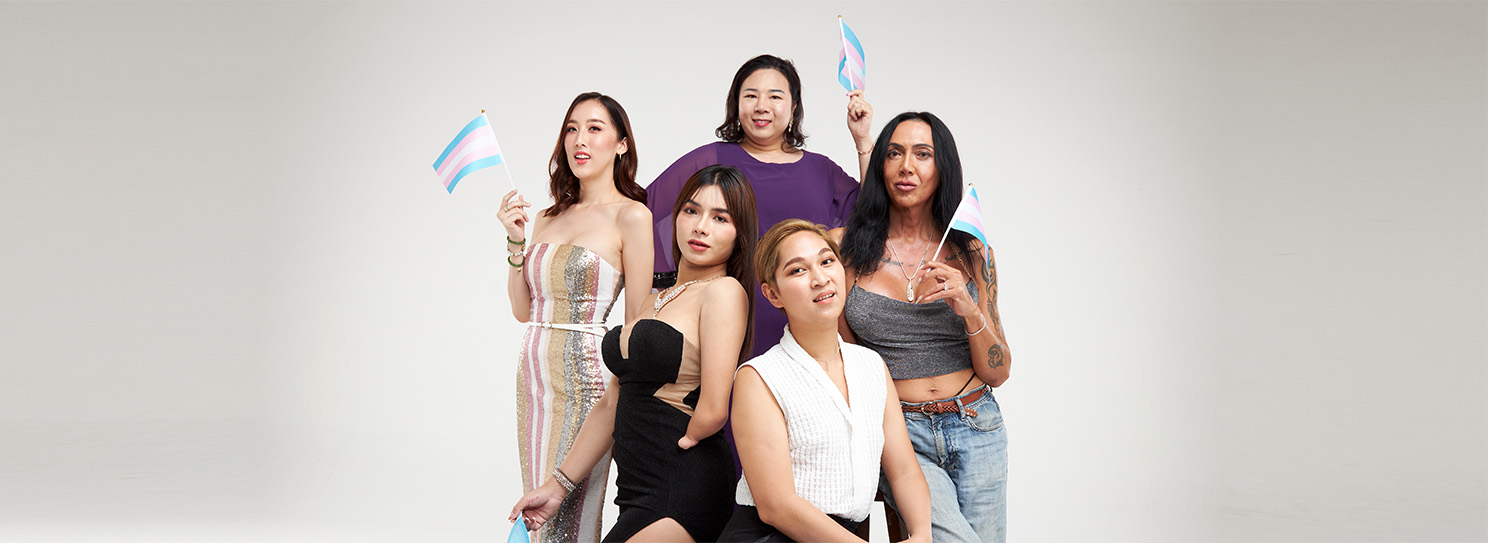

In 2025, the world has changed a lot from the old attitude that used to define the word "gender" as only male or female. Today, gender is no longer just a matter of organs or roles in society, but also a matter of personal identity, inner feelings, and the right to be yourself.
Understanding that "sexual diversity" is a part of nature, not a disorder or mental illness, is important for all levels of society to be aware of, especially the "family", which is the foundation of the growth of children and youth.
What is sexual diversity?
Sexual diversity or LGBTQ+ is a term used to describe a group of people with gender identities, sexual orientations, or gender roles that are different from the general male-female framework. The term LGBTQ+ is an abbreviation that covers various groups, including L - Lesbian or women who love women, G - Gay or men who love men, B - Bisexual or people who love both men and women, T - Transgender or transgender people whose gender identity does not match their birth sex, Q - Queer or Questioning, which means people who do not limit themselves to any gender framework or are in the process of finding their identity. And the + sign also indicates other gender diversity that is not in the above groups, such as Non-binary (not identifying as male or female), Intersex (people who have both sexes physically), and Asexual (people who have no sexual attraction), etc.
Gender diversity is a reflection of humanity in various aspects. It is not an abnormality, but a part of nature that should be respected, accepted, and treated equally in all societies.
Gender diversity is not a "disease" or "deviation".
In the past, misunderstandings about gender diversity caused many people to be labeled as "abnormal". But now, the World Health Organization (WHO) has clearly confirmed that LGBTQ+ people do not have mental or physical disorders, but are just people with different identities who should be equally accepted.
Why do parents need to understand LGBTQ+?
Parents are the first safe space for children.
Revealing their sexual identity for children is not easy. And if the home is not a "safe place", children will be more closed off and feel that no one understands them. Having parents who accept, support, and talk with understanding will help children dare to speak up, dare to be themselves, and have strong mental health.
Parents' understanding helps reduce children's stress.
Being pressured to “Being what you’re not” can leave LGBTQ+ kids feeling confused, stressed, depressed, and leading to dangerous behaviors like self-harm, running away from home, or substance abuse. Therefore, parents’ understanding is the best defense.
Signs that your child may want to come out
- Your child shows interest in sexual interests that are outside the norm.
- Avoids talking about boyfriends or relationships.
- Becomes more sad, irritable, or withdrawn.
- Starts dressing or acting outside the norm.
Note: Not all behaviors need to be interpreted as gender-related, but parents should be open to “listening” without judgment.
How to create a safe space in the family
1. Examine your own attitudes first.
Look back at how your parents view LGBTQ+. Have they ever used mocking or prejudiced words? Adjusting your own attitude is the beginning of creating good understanding.
2. Open up and talk to your child.
Don’t always wait for your child to talk. Try starting a conversation, such as, “Mom saw the news about LGBTQ+ and thought of you. What do you think?” Starting like this will help your child dare to be more open.
3. Listen without judgment.
Genuine listening means not interrupting, not criticizing, and not comparing to others. Just give your child space to talk comfortably.
4. Reaffirm that “Parents love their children no matter what.”
A simple statement like “Parents love their children the way they are.” can change their children’s lives forever.
4 Important Things Parents Should Understand About LGBTQ+
1. Diversity is Not Abnormal
Everyone has the right to their own identity, and so does LGBTQ+. Accepting diversity means accepting each other’s humanity.
2. Sexual behavior and gender identity are not the same.
Children may not want to change their gender, but feel that they do not fit the gender role that society has defined. Do not rush to conclusions, but ask with understanding.
3. LGBTQ+ have equal potential and success.
LGBTQ+ children can succeed in all aspects of their lives, just like other children, if they receive support from their families.
4. Family is the most important foundation.
Children who are accepted by their families tend to have better mental health, are more confident, and are better able to cope with social pressure.
The Role of Parents: From Controllers to Supporters
Changing roles from “Orderers” to “Listeners”
Changing roles does not mean that parents have to give in to everything. But it should be understood that “listening” is one way of effective communication and strengthening relationships.
Create activities together to strengthen bonds.
For example, watch LGBTQ+ movies together, read books, or join activities of organizations that support diversity.
Taking care of the physical and mental health of LGBTQ+ teenagers.
Sexual health.
- Provide knowledge about prevention of sexually transmitted diseases such as HIV, HPV, syphilis, etc.
- Promote access to annual health check-ups without stigmatization.
Mental health.
- If your child is stressed, depressed, or anxious, take them to see a mental health professional.
- Reassure them that “asking for help” is not weakness, but courage.
What should you do if you still don’t understand?
Consult a specialist.
- If parents feel confused, they should consult a specialist, such as:
- Child psychologists
- Gender medicine doctors
- Organizations that work with the LGBTQ+ group.
Attend training or workshops.
Many organizations in Thailand provide training to families to help them better understand sexual diversity.
Conclusion: Parents are the foundation of change.
In a society where there is still a lot of prejudice and stigma, “the family” is the beginning of change. Parents who understand and accept their children’s identity are the most important motivation. Children who grow up in safe homes will grow up to be brave, confident adults who can live happily in the world, regardless of their gender.
Because in the end, love that does not judge is the best gift that parents can give their children.
Sources and further reading
Primary and authoritative sources used for context and fact-checking.
- Frequently asked questions on sexual and gender diversity, health and human rights World Health Organization (WHO)
- The Thai Handbook of Transgender Healthcare Services IHRI & Center of Excellence in Transgender Health, Chulalongkorn University
- Standards of Care for the Health of Transgender and Gender Diverse People, Version 8 World Professional Association for Transgender Health (WPATH)
- Consolidated guidelines on HIV, viral hepatitis and STI for key populations (2022) World Health Organization (WHO)
- STI Treatment Guidelines: Transgender and Gender Diverse Persons U.S. Centers for Disease Control and Prevention (CDC)
- Legal Gender Recognition in Thailand: A Legal and Policy Review United Nations Development Programme (UNDP)
- The struggle of trans and gender-diverse persons United Nations Human Rights (OHCHR)