
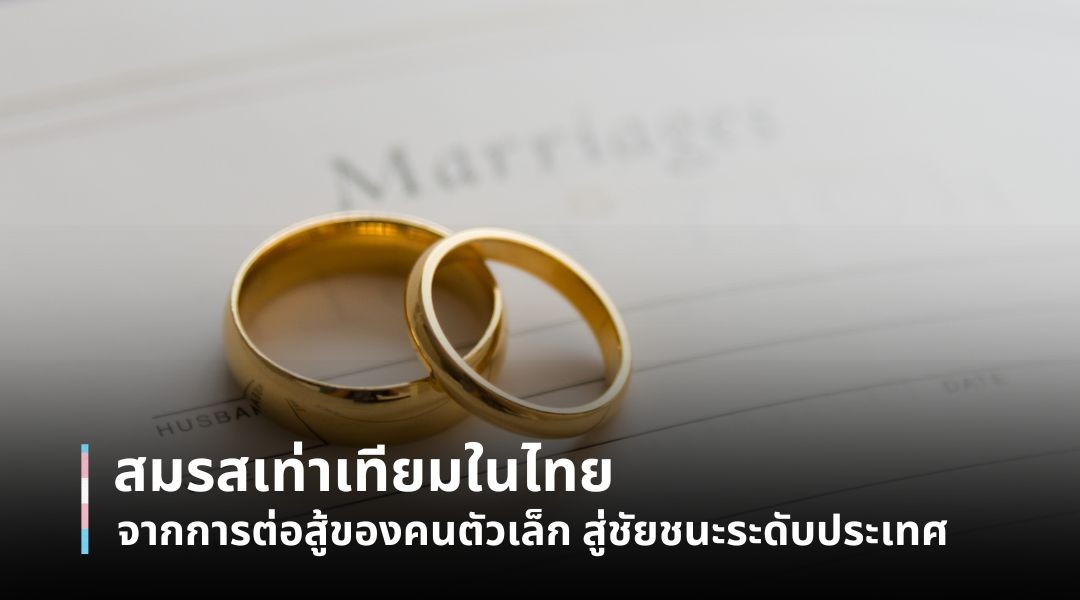
The passage of marriage equality in Thailand marks a historic shift — not only in law, but in the cultural consciousness of the nation. This change is more than a legal recognition of partnerships; it is a powerful acknowledgment that every love deserves equal dignity.
The success did not happen overnight. It is the result of years of activism, public education, cultural storytelling, and persistent voices from ordinary people, many of whom once felt too small to challenge the system. Yet, together, they moved the country.
Marriage Equality: Beyond the Ceremony, It Is About Human Dignity
Marriage equality does not simply mean LGBTQ+ couples can have weddings. It guarantees legal rights that heterosexual couples have always had access to, including:
- The right to make medical decisions for a partner
- The right to inherit property and assets
- Joint adoption and parental recognition
- Shared financial benefits and tax rights
- Legal recognition as a family unit
Before this law, LGBTQ+ partners in Thailand were often treated as strangers on paper, even after a lifetime together. Marriage equality corrects this injustice.
It sends one clear message:
Love is love — and every love has equal value.
How Ordinary People Sparked a Nationwide Movement
The roots of this victory lie in everyday lives and personal stories.
1) Visibility of LGBTQ+ Lives
As more LGBTQ+ people shared their stories openly — about love, family, and daily life — society began to see that their relationships are no different from anyone else’s.
2) The Role of Media and Pop Culture
The rise of LGBTQ+ representation in Thai dramas, films, and online content helped normalize diversity in gender and sexuality. Acceptance grew naturally, especially among younger generations.
3) Social Media as a Megaphone
Hashtags like #สมรสเท่าเทียม (#MarriageEqualityTH) mobilized hundreds of thousands of people. Online petitions gathered mass support.
What was once dismissed as a “minority issue” became a national conversation.
When the Public Speaks, Parliament Listens
For decades, the issue was sidelined in politics. But as public acceptance increased, political parties began openly supporting marriage equality in their platforms. This brought the discussion into Parliament — where it could no longer be ignored.
The debates were passionate, emotional, and deeply human.
In the end, what prevailed was the undeniable truth:
No one should have fewer rights simply because of who they love.
The Impact of Marriage Equality on Thai Society

The new law benefits not just LGBTQ+ couples — but the nation as a whole.
| Area | Positive Impact |
|---|---|
| Social Progress | Promotes inclusion, dignity, and reduces discrimination |
| Economy | Boosts tourism, wedding industry, property market, and family planning sectors |
| Global Reputation | Strengthens Thailand’s image as open, modern, and progressive |
| Cultural Growth | Encourages conversations about identity, self-acceptance, and equality |
Marriage equality is both a human rights milestone and an economic and cultural advantage.
A Victory Shared by Everyone
This victory does not belong only to LGBTQ+ people.
It belongs to parents who learned to understand their children, friends who stood up for each other, activists who refused to be silenced, and everyday citizens who believed in fairness.
At its heart, this movement reminds us:
We are all born to love and be loved — equally.
Thailand has shown the world that real change begins with ordinary people who refuse to give up.
Sources and further reading
Primary and authoritative sources used for context and fact-checking.
- Frequently asked questions on sexual and gender diversity, health and human rights World Health Organization (WHO)
- The Thai Handbook of Transgender Healthcare Services IHRI & Center of Excellence in Transgender Health, Chulalongkorn University
- Standards of Care for the Health of Transgender and Gender Diverse People, Version 8 World Professional Association for Transgender Health (WPATH)
- Consolidated guidelines on HIV, viral hepatitis and STI for key populations (2022) World Health Organization (WHO)
- STI Treatment Guidelines: Transgender and Gender Diverse Persons U.S. Centers for Disease Control and Prevention (CDC)
- Legal Gender Recognition in Thailand: A Legal and Policy Review United Nations Development Programme (UNDP)
- The struggle of trans and gender-diverse persons United Nations Human Rights (OHCHR)