
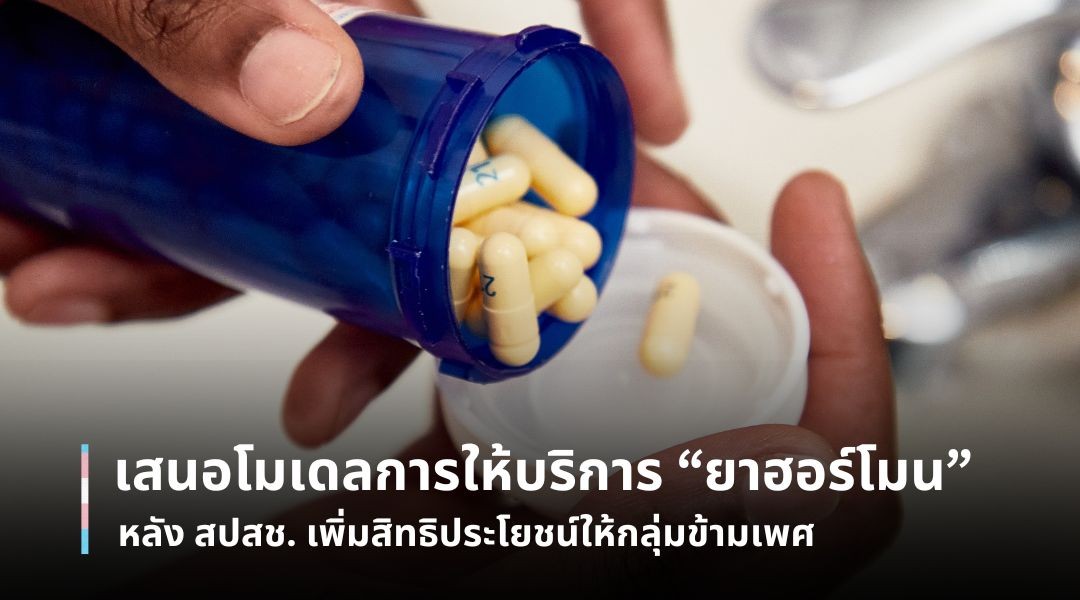
Following the resolution by the National Health Security Board (NHSB) on July 7, 2025, Thailand’s National Health Security Office (NHSO) has officially added “hormone therapy for gender affirmation” to the list of preventive and promotive (P&P) health benefits under the Universal Coverage Scheme (UCS), also known as the “30-baht Gold Card” system. The policy targets 20,000 transgender individuals in the 2025 fiscal year, with an allocated budget of 145.625 million baht. This development marks a significant policy advancement for gender-diverse communities, yet several critical issues remain unresolved in implementation.
While the inclusion of hormone therapy as a health benefit represents progress, key challenges regarding accessibility, clarity of service models, and actual readiness of health facilities persist.
Civil Society Proposes Using Article 3 Service Units as a Strategic Entry Point
Natchale Boonyapisomparn, Vice President of the Thai-PATH Association (Thai Professionals Advocating for Transgender Health), has voiced concerns that despite the legal recognition of hormone therapy as a health benefit under the UCS, significant ambiguity remains around service delivery. This includes unanswered questions about which service units are eligible to provide care, what the standard protocols are, and how services should be reimbursed or documented.
She notes that the budget of 145 million baht may not be sufficient to ensure nationwide access to hormone therapy services. Most provinces still lack capable service providers with experience in transgender health. As a result, she suggests that the NHSO consider utilizing Article 3 registered service units, which are civil society organizations officially recognized under Section 3 of the National Health Security Act B.E. 2545, and which already work closely with transgender communities.
A Community-Led Service Model: Screening and Education Before Medical Referral
Natchale proposes a hybrid service model where Article 3 community-based organizations serve as the primary point of contact. These organizations would be responsible for:
- Initial bloodwork and hormone level testing
- Providing education and counseling on hormone therapy
- Assessing clients against eligibility criteria
- Referring eligible individuals to certified healthcare providers for hormone prescription and ongoing monitoring
This model acknowledges the strength of civil society organizations in understanding the cultural context and unique needs of the transgender population. As many of the service providers are members of the LGBTQI+ community themselves, they are well-positioned to build trust and facilitate access in a respectful and effective manner.
NHSO Urged to Issue Clear Guidelines and Collaborate with Civil Society
According to Natchale, the NHSO must urgently provide clear and comprehensive implementation guidelines, including:
- Designated service units eligible to provide hormone therapy
- Standardized service procedures and referral systems
- Financial reimbursement mechanisms
- Mechanisms for community education
She also stressed that collaboration with registered civil society organizations is not optional but necessary, as these groups have proven experience in outreach, care, and support for transgender communities across Thailand.
Reconsidering Drug Formulary and Monitoring System
Another critical issue concerns the current list of hormone drugs approved under the benefit package. Out of six items on the list, only one is appropriate for transmasculine individuals, while the rest are for transfeminine individuals. Natchale raises the concern of whether this single option is medically adequate and if it fully meets the diverse health needs of trans men.
She recommends that the NHSO establish a monitoring and evaluation system to track the effectiveness, accessibility, and impact of the hormone therapy benefit. This system should also allow for the periodic review and revision of the drug list, based on new evidence and community feedback.
Advocacy Efforts Will Continue Beyond Policy Inclusion
While the addition of hormone therapy to the UCS benefit package is a milestone, Thai-PATH does not see this as the final goal. Natchale confirms that her organization will continue to advocate for a more inclusive, evidence-based, and sustainable health service model. This includes ongoing engagement with NHSO, health professionals, and community partners to ensure equitable implementation and continued policy improvements.
A Small Step That Needs a Robust System to Succeed
The inclusion of hormone therapy for gender affirmation in Thailand’s Universal Coverage Scheme is a historic achievement for the transgender community. However, it also highlights the urgent need for a coordinated, well-resourced, and inclusive health service system that bridges policy and practice.
To truly realize this benefit, all stakeholders—government agencies, healthcare providers, and civil society—must work together to ensure that transgender people not only have the right to care but can access it with dignity, safety, and trust.
Sources and further reading
Primary and authoritative sources used for context and fact-checking.
- Frequently asked questions on sexual and gender diversity, health and human rights World Health Organization (WHO)
- The Thai Handbook of Transgender Healthcare Services IHRI & Center of Excellence in Transgender Health, Chulalongkorn University
- Standards of Care for the Health of Transgender and Gender Diverse People, Version 8 World Professional Association for Transgender Health (WPATH)
- Consolidated guidelines on HIV, viral hepatitis and STI for key populations (2022) World Health Organization (WHO)
- STI Treatment Guidelines: Transgender and Gender Diverse Persons U.S. Centers for Disease Control and Prevention (CDC)
- Legal Gender Recognition in Thailand: A Legal and Policy Review United Nations Development Programme (UNDP)
- The struggle of trans and gender-diverse persons United Nations Human Rights (OHCHR)