
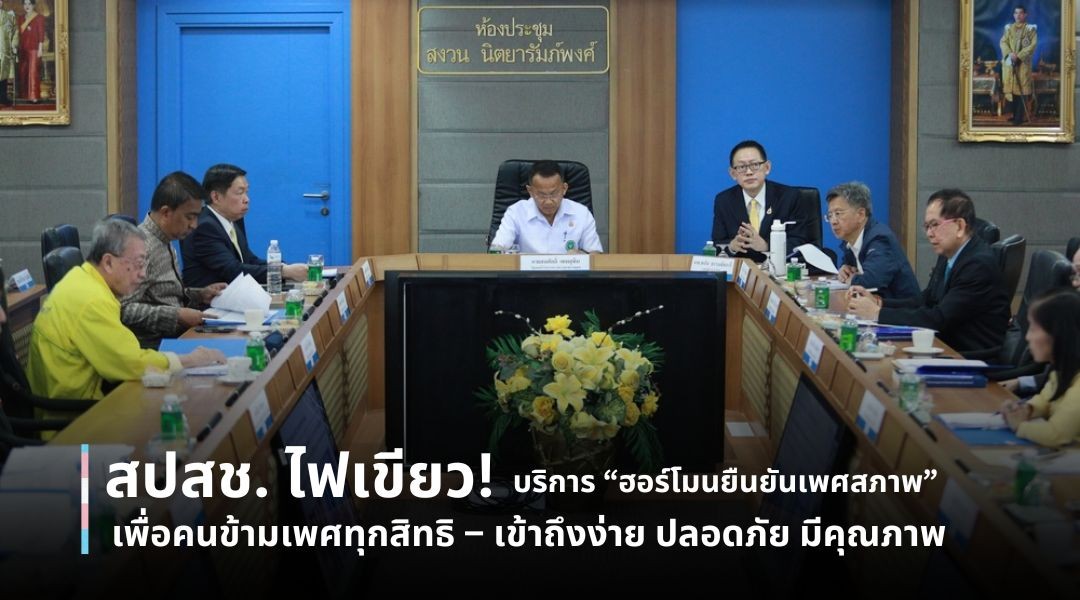
Thailand has taken a significant step toward gender equality in healthcare. The National Health Security Office (NHSO) has officially approved gender-affirming hormone therapy for transgender individuals as part of public health services. This historic move aims to ensure all transgender people—regardless of their healthcare coverage—can access safe, supervised hormone therapy that aligns with their gender identity.
This decision reflects the growing recognition of gender-diverse individuals and the need to protect their right to health and well-being within the national healthcare system. The service is not limited to any one health scheme and is now available under:
- Universal Coverage Scheme (UCS) or “gold card”
- Social Security Scheme (SSS)
- Civil Servant Medical Benefit Scheme (CSMBS)
- Even individuals without a national ID (with sufficient proof of identity)
Moving Beyond Unsafe Hormones – Toward Medical Supervision
For years, many transgender people in Thailand have relied on unregulated hormone products, purchasing them online or from pharmacies without medical guidance. This has placed them at risk of serious health complications such as blood clots, liver damage, and hormonal imbalances due to misuse or poor-quality products.
By offering hormones through public hospitals and clinics under professional supervision, NHSO’s policy offers a safer and more sustainable solution. Individuals will receive proper assessments and regular monitoring to reduce side effects and ensure their overall well-being.
Who Is Eligible?
Anyone who is transgender, including:
- People under the Universal Coverage Scheme
- Workers under the Social Security system
- Government officials under the Civil Servant scheme
- Individuals who lack a Thai national ID (e.g., stateless people or those in gender transition processes)
Access is not based on gender assigned at birth but on one’s gender identity. However, medical professionals (physicians or psychiatrists) will first assess the individual’s physical and mental readiness before initiating hormone treatment.
Step-by-Step Guide to Accessing Services
- Contact a participating facility – Typically a public hospital or a specialized sexual health clinic
- Undergo medical evaluation – Includes physical and psychological assessments
- Receive hormone therapy prescription – Based on medical guidelines and individual goals
- Begin hormone treatment – Supervised by healthcare providers
- Follow-up care – Routine blood tests and ongoing monitoring to ensure safe use
For transfeminine individuals (assigned male at birth, identifying as female), treatment may include estrogen and androgen blockers.
For transmasculine individuals (assigned female at birth, identifying as male), treatment typically involves testosterone.
More Than Medicine – A Step Toward Social Recognition
This is not just a medical milestone—it’s a social one. Gender-affirming healthcare recognizes that hormone therapy is not cosmetic or elective, but essential to the mental and emotional health of transgender individuals.
Access to affirming care has been shown to reduce depression, anxiety, and suicidal ideation in transgender communities. By integrating it into Thailand’s public health system, the NHSO is helping to reduce stigma, build trust, and promote dignity.
Voices from the Community
“I’ve been self-medicating for over 10 years. No doctor, no tests, just trial and error. When I heard that hormone therapy is now covered, I cried. It finally feels like I exist in the system.”
– Trans woman, 32, Chiang Mai
“I’m a trans man with a full-time job and Social Security coverage. I never imagined SSS would support something like this. It gives me hope that the system is starting to see us.”
– Trans man, 25, Bangkok
Where Can I Get It?
- Public hospitals under the Ministry of Public Health
- Specialized gender or sexual health clinics (e.g., Mplus Chiang Mai, Rainbow Sky Clinic, etc.)
- Some community-based health centers with medical partnerships
Availability may vary by region—calling ahead is recommended.
Need Help?
- NHSO 24/7 Hotline: 1330
- Local public hospitals or clinics
- LGBTQ+ support groups and community organizations
The inclusion of gender-affirming hormone therapy under Thailand’s national healthcare system is a landmark achievement. It affirms the right of all transgender people to live with dignity, to access safe medical care, and to express their identity without fear or discrimination.
No matter what health scheme you’re under—or even if you’re undocumented—this is a powerful step toward health equity. Safe transition care is now within reach for all.
“Hormones are not a luxury—they are healthcare.”
Sources and further reading
Primary and authoritative sources used for context and fact-checking.
- Frequently asked questions on sexual and gender diversity, health and human rights World Health Organization (WHO)
- The Thai Handbook of Transgender Healthcare Services IHRI & Center of Excellence in Transgender Health, Chulalongkorn University
- Standards of Care for the Health of Transgender and Gender Diverse People, Version 8 World Professional Association for Transgender Health (WPATH)
- Consolidated guidelines on HIV, viral hepatitis and STI for key populations (2022) World Health Organization (WHO)
- STI Treatment Guidelines: Transgender and Gender Diverse Persons U.S. Centers for Disease Control and Prevention (CDC)
- Legal Gender Recognition in Thailand: A Legal and Policy Review United Nations Development Programme (UNDP)
- The struggle of trans and gender-diverse persons United Nations Human Rights (OHCHR)