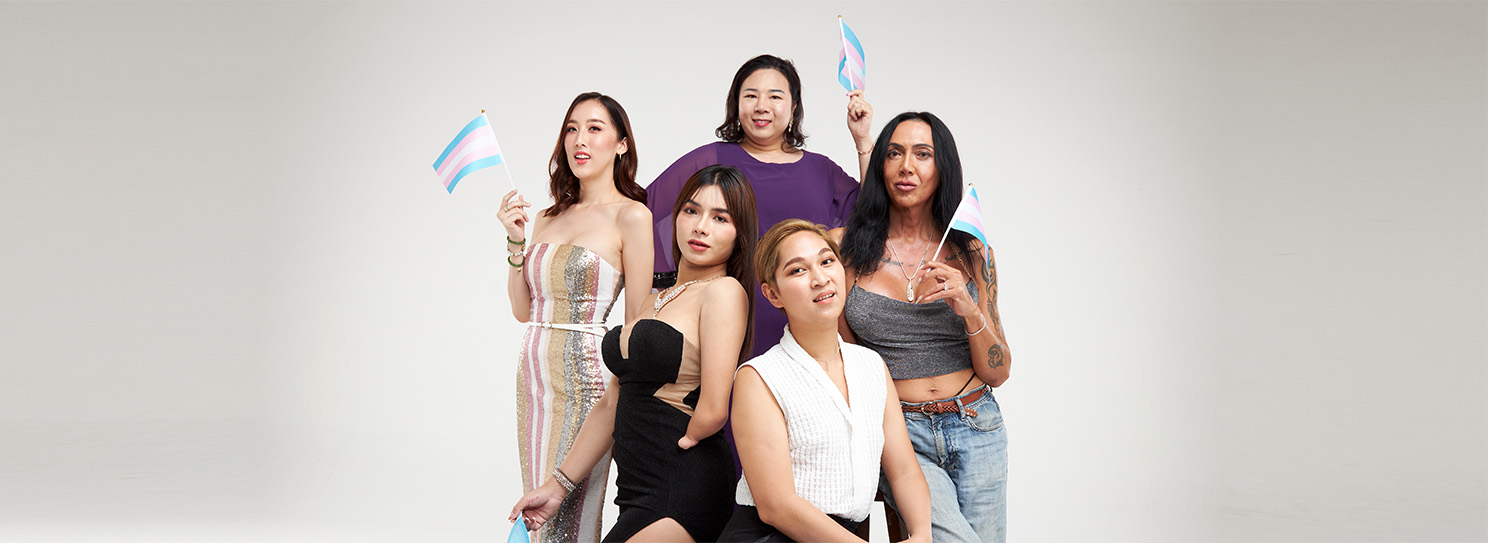

On June 18, 2024, it was a historic day for the LGBTQIA+ community after it was announced that marriage equality had been passed. All couples could register their marriage without gender being a condition. This made many LGBTQIA+ people happy and delighted with the change that had occurred.
Some people in society thought that having marriage equality meant that Thailand had true gender equality, which contradicted the thinking of LGBTQIA+ people who thought that this was just the beginning and that there were still many issues that needed to be addressed.
In addition, some did not accept this change. Some of the comments were, “Are LGBTQIA+ demanding too much? Do they want everything? The country is already open enough already,” or “Shouldn’t they spend their time pushing for other laws? What’s nonsense?”

Therefore, the next question is whether it is “too much” or “nonsense” for a person to demand their own rights. And does having marriage equality mean that Thailand has true gender equality?
Today, Sanook invited Dr. Polly (Tanya Paomeephan) and Dana (Dana Haram) to talk about their feelings after having marriage equality passed, and to reveal their perspectives on gender equality in Thailand and abroad, and how they differ. Including other issues that she wants to push further
Being LGBTQIA+ in Thai society
Sanook asked Dr. Polly about her experience of being LGBTQIA+ in Thai society, what words or events did Dr. Polly remember by heart?

“I would like to say that at least people who are gay, trans, or men who act like women often hear the words “Ee Tud”, “Eek Ratoey”, especially in the 90s when it was not as accepted as it is today. But if anyone tries to point at her and call her “Ee Tud” these days, society will reject her. I also grew up being called “Ee Tud” and was teased all the time. I have met older adults who did not believe that being a Transwoman would make us a teacher or an academic. They would ask questions that were similar to testing our knowledge. The best thing we could do was to do our job well, using our knowledge and abilities to show that being a Transwoman does not affect our abilities. I do not want to blame people who think like that because each person grew up in a different environment and society and was raised by a different family. Sometimes I feel sorry for them because they did not grow up in a society that viewed humanity as the main principle. So it turned out that we had to deal with ourselves more. We would not blame them. We just have to do our best.”
In addition, Dr. Polly would like to leave a message for families who are not yet open to having their children be LGBTQIA+ that “If you respect your child’s decision, don’t force them, no matter what gender they are born as, they can be successful in their path.”
Currently, Dr. Polly is a professor and academic, and recently resigned from the position of Miss Trans Thailand 2024.
Feelings after passing the marriage equality test
The couple revealed that they were happy to have marriage equality. Polly said, “In fact, it is a confirmation that our country has moved forward to another step. The thinking of adults in society or people in society has developed in a more developed direction. If compared to the past, our country still had a fixation on male and female gender. It is in every law. Gender is specified. This is a very important step that shows that adults in the country, all sectors of the government, value humanity equally, not just gender.”
Perspectives on gender diversity between Thailand and other countries
Both of them have experience living abroad. Dr. Polly has experience studying for a master’s degree in Germany. And Dana was born and raised in America. Sanook asked both of them to share their perspectives on LGBTQIA+ in each country. Are there any differences?

“If we compare it to other countries, most of them will go to live in European countries. In Europe, they implemented the law on marriage equality and gender identity recognition before us. But deep down, because there are many Christians, some people who are very strict about the Bible still disagree with gender diversity. Sometimes, in some cities, there are even more than in our country. The difference is that their country prioritizes human rights, not religion or anything else. So they have laws that promote humanity for people with diversity to use. This is in contrast to our country, which seems to accept LGBTQ more, but we are slower than them in terms of laws and enforcement. If foreigners come in, they will be surprised that our country doesn’t have equal marriage. But today, we do. In the future, we hope that there will be changes for the better,” said Polly.
Dana agreed with Dr. Polly, adding that “Thailand’s acceptance of LGBTQIA+ over the past year has shown that people in society, especially the younger generation, have become more open about their sexuality. This can be seen from the fact that Thailand has equal marriage. Which is a good start.”
Which issue do you want to push for the LGBTQIA+ community?
Both of them agreed that another issue they want to push for after marriage equality is passed is the “Gender Identity Recognition Act.”
Dr. Polly shared her experience of the difficulties she had to face because her title did not match her gender identity.
“Dr. Polly herself works in the academic field, which requires her to travel to speak in many countries all the time. Currently, our ID cards still use the title Mr., which makes traveling in various countries very problematic. We will be detained and not allowed to enter the country, even though we come as a representative of the country to speak on academic matters. In this regard, we believe that in reality, medical technology has advanced a lot, allowing men to cross over to be Women can be perfect, and women can also cross over to be men perfectly. But what they don't get is a document that cannot be in accordance with their appearance or gender identity. So it raises questions, judgments from the beginning before there is even a discussion about why there is a title that does not match their gender identity. So the next law that we want to push for after marriage equality so that LGBTQ can live and be better citizens of the world is the Gender Identity Recognition Act."\

Marriage equality is just the beginning
After talking to Dr. Polly and Dana, we learned that "marriage equality" is just the beginning of gender equality in Thailand. Because there are still many issues that have not been recognized, whether it is the issue of titles that do not match their gender identity as Dr. Polly mentioned or other issues such as child recognition in same-sex couples.
However, this is a good start for Thailand. And I hope that in the future, Thai society will truly look beyond the word gender without having to use the words LGBTQIA+, female or male. There is only humanity. It will definitely make Thailand more livable than before.
cr.sanook
Sources and further reading
Primary and authoritative sources used for context and fact-checking.
- Frequently asked questions on sexual and gender diversity, health and human rights World Health Organization (WHO)
- The Thai Handbook of Transgender Healthcare Services IHRI & Center of Excellence in Transgender Health, Chulalongkorn University
- Standards of Care for the Health of Transgender and Gender Diverse People, Version 8 World Professional Association for Transgender Health (WPATH)
- Consolidated guidelines on HIV, viral hepatitis and STI for key populations (2022) World Health Organization (WHO)
- STI Treatment Guidelines: Transgender and Gender Diverse Persons U.S. Centers for Disease Control and Prevention (CDC)
- Legal Gender Recognition in Thailand: A Legal and Policy Review United Nations Development Programme (UNDP)
- The struggle of trans and gender-diverse persons United Nations Human Rights (OHCHR)