
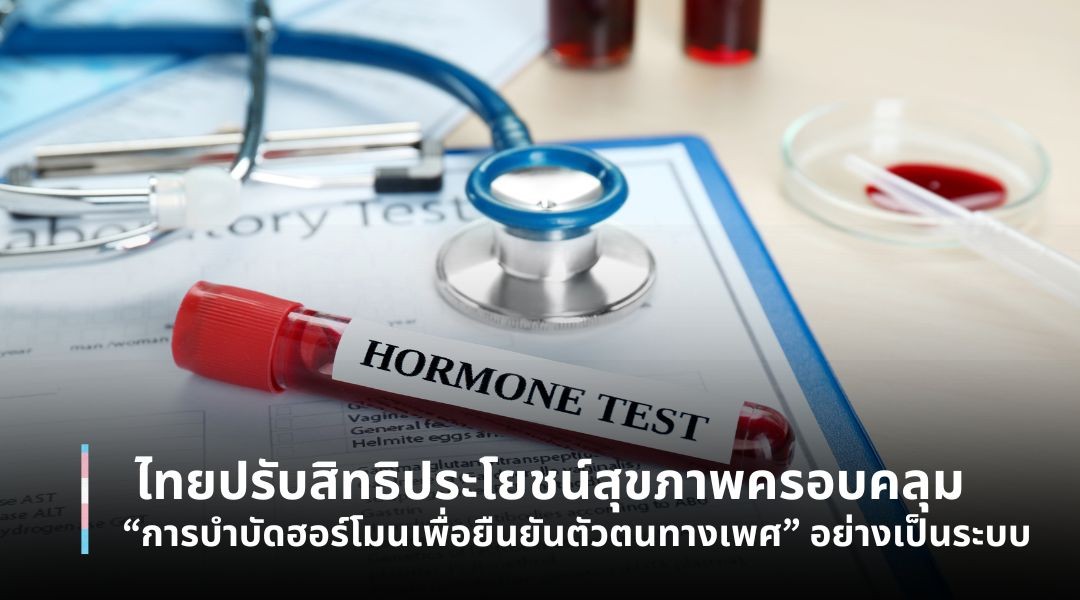
Thailand has taken a significant step forward in strengthening healthcare access and equality for transgender individuals. The National Health Security Office (NHSO) has formally issued guidelines to standardize and support gender-affirming hormone therapy under the Universal Health Coverage scheme.
The new policy was officially published in the Royal Gazette on October 28, 2025, marking the first time that Thailand has clearly defined clinical standards, laboratory monitoring, healthcare facility requirements, and approved hormone medications for gender-affirming care.
This development aims to ensure that transgender individuals can receive safe, ethical, and medically supervised hormone treatment—addressing longstanding risks associated with self-medication, unregulated hormone sources, and lack of standardized medical guidance.
Key Objectives of the Policy
Under the new framework, healthcare facilities that wish to provide hormone therapy must meet the Contracting Provider Profile (CPP) standards, which include:
- Qualified medical and multidisciplinary personnel
- Proper clinical consultation and informed consent processes
- Continuous treatment monitoring and follow-up
- Use of electronic health records connected to NHSO data systems
This marks a move toward a systematic, accountable, and patient-centered approach to gender-affirming healthcare.
Required Clinical and Laboratory Evaluations
To ensure safety before and during hormone therapy, physicians must conduct regular physical examinations and laboratory tests. These may include:
- Complete Blood Count (CBC)
- Hormonal profiles (FSH, LH, Estradiol, Testosterone)
- Liver function tests (SGOT, ALT)
- Lipid profile and blood sugar levels
- Kidney function and electrolyte levels
- Bone density screening (as clinically indicated)
These monitoring standards help minimize long-term health complications and allow physicians to adjust treatment appropriately.
Approved Hormone Medications
The policy specifies medications that are allowed and safe for gender-affirming hormone therapy under NHSO coverage.
For Transfeminine Individuals
- Estradiol tablets (1 mg, 2 mg)
- Estradiol transdermal gel (0.06%)
- Cyproterone acetate and Spironolactone (anti-androgens)
- Leuprorelin or Triptorelin injections for hormone suppression
For Transmasculine Individuals
- Testosterone enanthate injection (250 mg, administered on physician-approved schedule)
By clearly defining approved medications, the policy helps reduce reliance on unsafe online hormone products and improves patient health outcomes.
Digital Health System and e-Claim Management

The updated policy integrates service documentation and billing through:
- NHSO Health Platform
- e-Claim submission system
- This ensures:
- Transparent service coverage
- Efficient reimbursement for healthcare providers
- Reduced treatment interruption caused by administrative delays
Impact on Social Equality and Public Health
This policy represents an important milestone for Thailand in recognizing gender-affirming care as a legitimate medical need—not a cosmetic or elective service.
It contributes to:
- Protecting bodily autonomy and dignity
- Reducing discrimination in healthcare access
- Promoting long-term, safe, and medically guided treatment
- Supporting inclusive, person-centered public health policy
The shift reflects Thailand’s broader commitment to upholding human rights and improving quality of life for transgender individuals.
Sources and further reading
Primary and authoritative sources used for context and fact-checking.
- Frequently asked questions on sexual and gender diversity, health and human rights World Health Organization (WHO)
- The Thai Handbook of Transgender Healthcare Services IHRI & Center of Excellence in Transgender Health, Chulalongkorn University
- Standards of Care for the Health of Transgender and Gender Diverse People, Version 8 World Professional Association for Transgender Health (WPATH)
- Legal Gender Recognition in Thailand: A Legal and Policy Review United Nations Development Programme (UNDP)
- The struggle of trans and gender-diverse persons United Nations Human Rights (OHCHR)