
April 17, 2025
The UK Supreme Court has ruled that the legal definition of “woman” must be based on biological sex.
A High Court judge said transgender people still have legal protection from discrimination, but “the concept of sex is binary.”
The court agreed with For Women Scotland, a Scottish women’s advocacy group, which had brought a lawsuit against the Scottish government, arguing that gender-based protections should only apply to people who were born female.
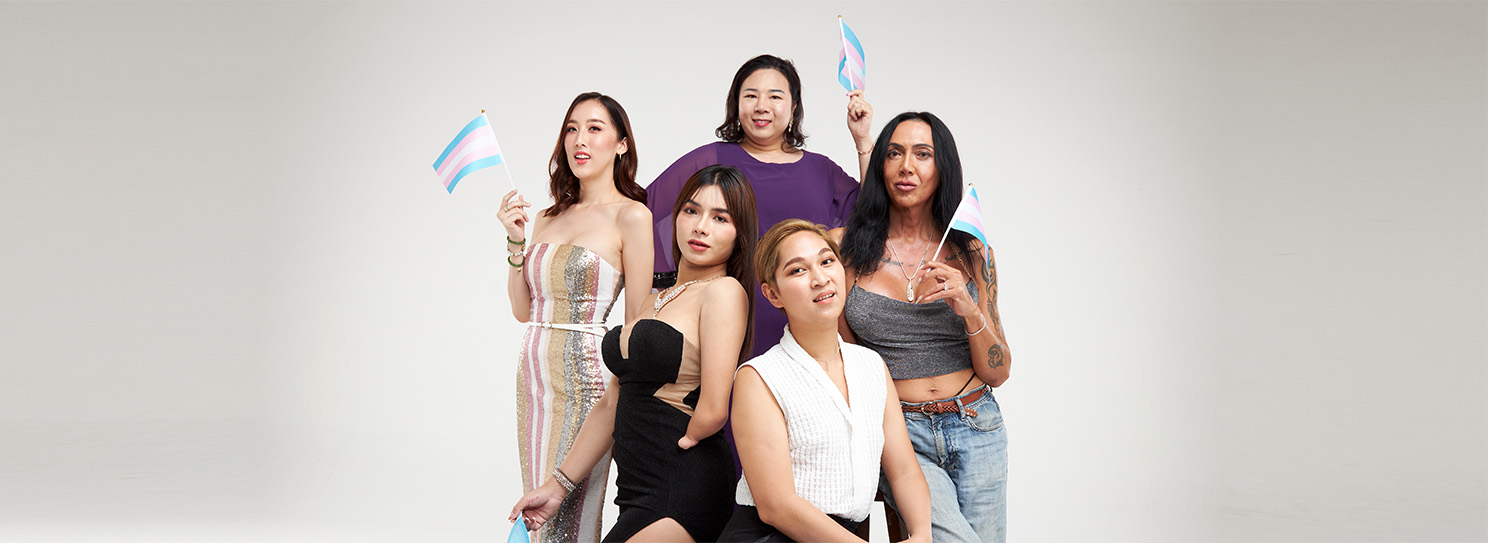
A transgender woman is a person who was born male but identifies as a woman, while a transgender man is a person who was born female but identifies as a man.
A UK judge has warned that the landmark ruling should not be seen as a victory for one side of the debate over the other.
There were also scenes of jubilation for women’s campaigners outside the Supreme Court, while transgender people warned that the case could erode their protections against gender discrimination based on their newly defined gender identity.
The court’s ruling will have implications for the operation of gender-segregated settings and services, such as hospital wards, prisons, shelters and support groups.
How did we get here?
The ruling is the culmination of a long legal battle between the Scottish government and campaign group For Women Scotland, which began in 2018 when the Scottish Parliament passed legislation aimed at creating gender balance in public sector committees.
For Women Scotland complained that ministers had included transgender people on the board in the legislation.
The Scottish government argued that transgender people with a gender recognition certificate (GRC) were entitled to protection based on their gender, while For Women Scotland argued that protection only applied to people born female.
After a series of legal cases in the Scottish courts, the issue was now headed to the Supreme Court in London for a final decision.
The court was asked to decide on the correct interpretation of the Equality Act 2010, which applies in England, Scotland and Wales, which provides protection against discrimination based on characteristics including “sex” and “gender change” (or sex change).
What did the ruling say?
The UK Supreme Court’s ruling, led by Lord Hodge, concluded: The definition of “woman” and “sex” in the Equality Act 2010 means “biological woman and biological sex”.
The ruling said any other interpretation of the law would make the law “inconsistent and impractical”.
The ruling said the Scottish Government’s interpretation of the law would “create two subgroups”, with transgender people with a Gender Recognition Certificate (GRC) having more rights than those without.
The judges said there was “no clear way” to distinguish between the subgroups, as details about those with a GRC are confidential.
The judges also added that nothing in their ruling was intended to prevent transgender people from being appointed to government boards or to undermine the importance of addressing the underrepresentation of transgender people on such boards.
The ruling said: “The only issue for determination is whether the appointment of a transgender woman with a GRC constitutes the appointment of a woman and whether it meets the stated targets of gender representation, which are intended to have 50% female non-executive members. In our judgment, this is not the case.”
Transgender people are still protected by the Equality Act. The legally protected nature of gender reassignment is not affected by the ruling. And Lord Justice Hodge stressed that there are other safeguards against direct and indirect discrimination and harassment.
He made clear that trans people are a “vulnerable and often abused minority” who “must fight discrimination and prejudice while trying to live with dignity”.
The reaction
It is not yet clear what the UK decision will mean in practice, but the suggestion is that women-only spaces should be reserved for biological women only.
However, there are conditions that must be met, with services having to demonstrate that the exclusion of trans people is limited and proportionate in achieving a legitimate aim, and an outright ban is not supported.
Amnesty International UK CEO Sash Deshmukh called on the UK government and public policymakers to clarify how they will “strongly enforce anti-discrimination provisions” to protect the trans community “from any discrimination or prejudice from those who seek to use this decision as a pretext for doing so”.
Campaign group TransActual UK said the trans community had been “devastated” and that if trans women could not be accommodated in women-only spaces “it would mean we could not participate in society”.

Harry Potter author J.K. Rowling, who is a supporter of For Women Scotland, said the ruling was a victory for women and girls across the UK.
Conservative Party leader Chem Badenoch described it as a victory: "Women are women, men are men. You can't change your biological sex."
Dr Annie Donaldson, who researches violence against women and supports For Women Scotland, said the ruling "clears up the legal question of 'what is a woman?'".
However, she stressed that she would not support discrimination against anyone.
What are the situations like in other countries?
In January, US President Donald Trump signed an order stating that the US only officially recognises two genders: male and female.
The order said that neither gender could be changed and was "based on fundamental and indisputable facts". According to a 2023 global survey by Statistica, 3% of respondents across 30 countries identified themselves as transgender or non-binary. (Female or Male)
As of November 2024, 21 countries, including Argentina and Nepal, allow gender identification without court or medical approval. But many other countries do not provide legal recognition for transgender people at all.
In August, a transgender woman from Australia won a discrimination case against a women-only social media app after she was denied access because she is male.
The outcome of the case could set a legal precedent for resolving conflicts between gender identity and gender-based rights in other countries. That’s because Australia is one of 189 countries that have ratified the Convention on the Elimination of Discrimination Against Women (CEDAW), along with Brazil, India and South Africa.
It is an international treaty, adopted by the United Nations in 1979, which in effect forms the international body of rights for women. Australia’s ruling is significant for countries that have ratified CEDAW, as courts in other countries often look to what other countries have done when interpreting international treaties.
CR.BBC
Sources and further reading
Primary and authoritative sources used for context and fact-checking.
- Frequently asked questions on sexual and gender diversity, health and human rights World Health Organization (WHO)
- The Thai Handbook of Transgender Healthcare Services IHRI & Center of Excellence in Transgender Health, Chulalongkorn University
- Standards of Care for the Health of Transgender and Gender Diverse People, Version 8 World Professional Association for Transgender Health (WPATH)
- Consolidated guidelines on HIV, viral hepatitis and STI for key populations (2022) World Health Organization (WHO)
- STI Treatment Guidelines: Transgender and Gender Diverse Persons U.S. Centers for Disease Control and Prevention (CDC)
- Legal Gender Recognition in Thailand: A Legal and Policy Review United Nations Development Programme (UNDP)
- The struggle of trans and gender-diverse persons United Nations Human Rights (OHCHR)